 ™
Three word and letter games for families
Try three paper-and-pencil activities at home. Spot a letter change, write a surprise sentence, and take turns building a word ladder.
Learn and play at any age
Set up a game on the table
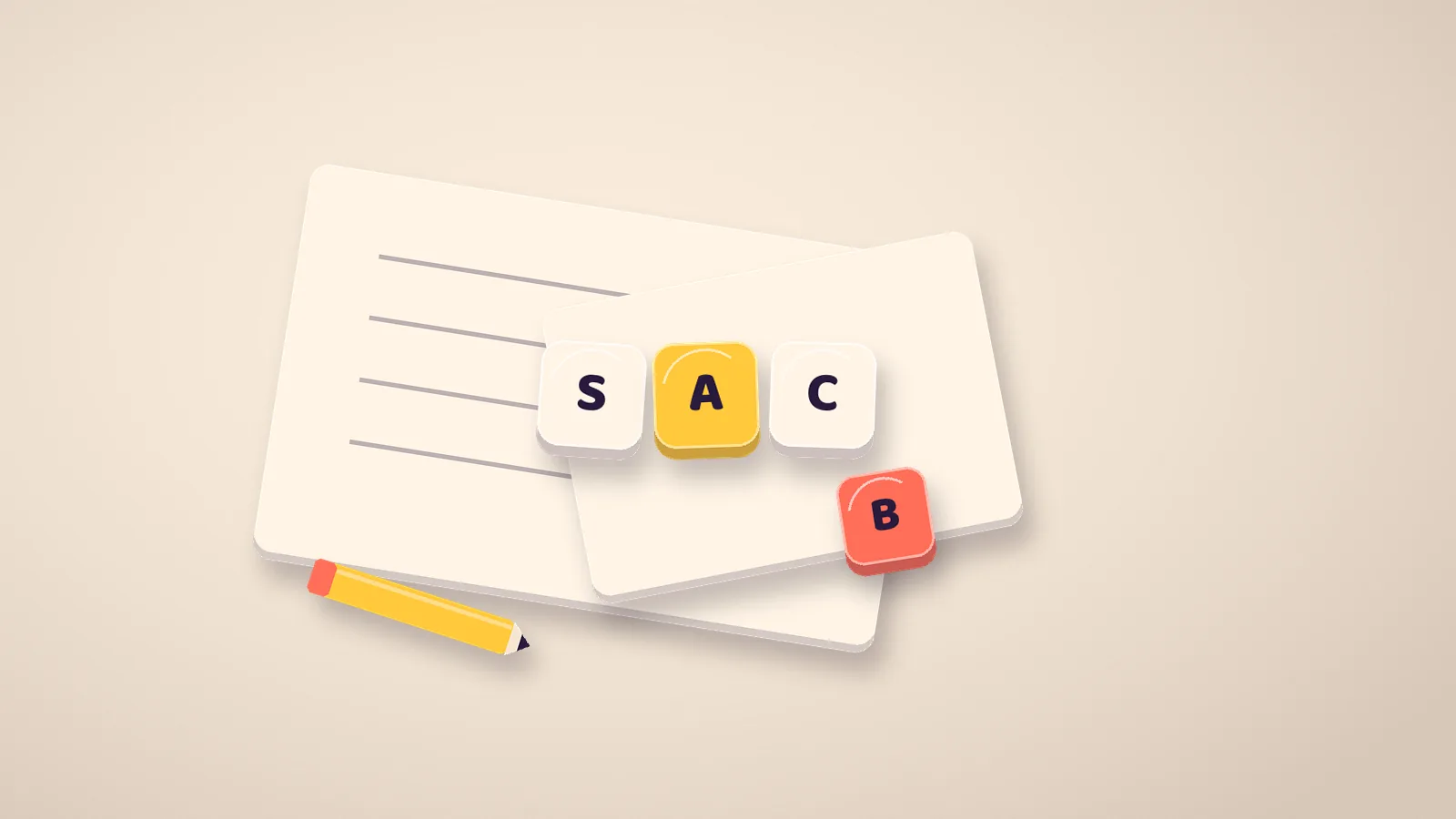
Grab some paper and a pencil, and clear a little space on the table. Write one letter on each slip of paper. Make two copies of the vowels you plan to use and add a few consonants. Leave the cards large enough for a child to pick up and move, and sit where everyone can see the letters right side up. If your child enjoys making the cards, give them the pencil before you play.
Choose two or three known words together. For a child who starts, objects present in the room can give ideas. Show a bag, say “sac” and lay out S, A, and C. A child who already reads can lay out the letters themselves. Decide with him whether you will read the words aloud, use them in a sentence or point only the letter that moves. Give them the option to point to the answer. At times, moving a tile is a complete way to participate.
The three activities of this article use the same material. You can try one and stop as soon as it has worked. If a word is unknown or if a letter is confusing, say the word and show what it means. The obstacle is sometimes vocabulary and sometimes reading. This small check helps you to choose the help that makes sense.
Activity 1 – Find the letter that moves
Place SAC, then write BAC right below. Ask the child to point to the letters that are identical. He will see A and C in the same places. Then drag B instead of S on the first line. Read the two words with him. To give a quick context to BAC, imagine a storage bin where the letters are stored after the game. If he finds another sentence or mimes the gesture of tidying, keep his idea.
Repeat the game with BAC and BAL. The letter that changes is this time at the end. When the child compares the two lines, let him search in the order that suits him. Then invite him to explain his gesture. "I replaced C by L" gives more precise information than "I found". With a very young reader, pointing to the right square and repeating the words together can suffice. If the child is comfortable reading, ask them to make the next pair for you.
SAC → BAC → BAL
If you want to reverse the roles, close your eyes while the child changes a letter. It's your turn to guess the box. Do a voluntary, visible search. Compare it from left to right and say what you notice. You thus show a method that can be repeated by playing. If the child invents a combination that does not form a word, read it together and look for a real word around the same letters.
Activity 2 – The surprise sentence
Prepare BAL and MAL. A player chooses one of the two starting cards, then says a sentence where the word has meaning. “On a dansé au bal” (We danced at the ball) and “j’ai mal au pied” (My foot hurts) give separate images. Then, change the first letter and invent a new sentence. “On a dansé au mal” (We danced to evil) will probably make you smile. Take advantage of the reaction to ask a question about the meaning. What do you need to change in the sentence to work with the new word?
You can do all the oral activity before presenting the maps. This version is suitable if the child recognizes the words in a conversation but still hesitates before the letters. If the child reads comfortably, ask them to write down his favorite phrase, draw it or repeat it the next day. If the word is not common for him, give an example from a situation they know. A personalized meaning image is worth more in this activity than a recited definition.
A variant consists of playing with PONT and PORT. A bridge allows you to pass on the other side. At the port, there are boats. Watching a photo or making a sketch gives two concrete marks. Check with the child that the change of letter to the writing is between O and T. Then read the two words according to your usual pronunciation and notice together what you hear.
Activity 3 – Take turns building a ladder
Write SAC to the left and MAL to the right. Keep the intermediate words hidden face. In the first round, offer a choice between transforming the beginning or the end. If the child wants to try the beginning and hesitate, presents two possible letters including the B. Once BAC is placed, exchange the roles. It can tell you which box to look at while you name a word. The passage to BAL then MAL completes a word ladder that each has helped to build.
SAC → BAC → BAL → MAL
Each time, read the new word in its entirety. It is tempting to take care of the new tile and forget the rest. Ask the person who did not play to check the remaining letters. Both the roles of player and auditor are useful. If the child wants to take both roles in the last move, let him do it. The path is short and he can tell the whole story afterwards.
Make a game your child can play again
At the end of the session, propose to store two pairs of cards in an envelope. On the front, draw a small symbol to remind the set-up. An arrow between two boxes can mean “trouve la lettre qui bouge” (find the moving letter). Put the words in order on the back in case the child wants to check. Then he can present the activity to another person, or replay it in front of you by choosing a different sentence. If he prefers to invent his own cards, limit the first envelope to two words already read together. It will remain easy to open and resume.
For an easier version, simply use PONT, PORT and FORT already laid, then ask the child to put them back in order by indicating the boxes. For a freer version, ask him to choose another starting word that he can draw. Look together for a neighbor. A successful session can end with two words that you understand well. If the envy comes back the next day, take the same cards and let the child choose the order of the next round.