 ™
How to find a bridge word in a word ladder
Find an intermediate word that opens a route. Practise keeping useful letters in place and taking a detour in a five-letter ladder.
Game strategies
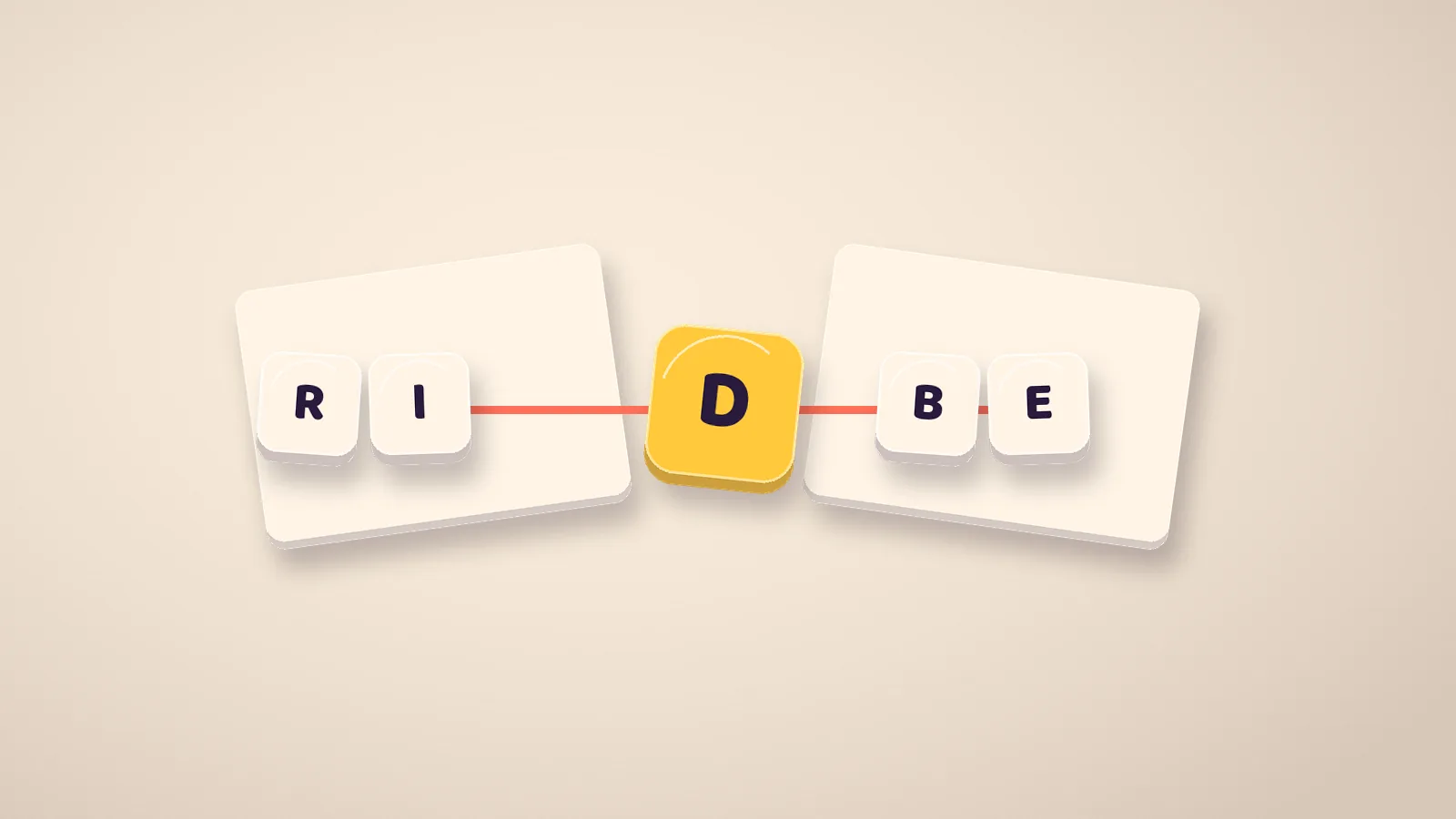
What an intermediate word does
The French words RIME and ROBE differ at I and M. Write out the two direct replacements. If you change the vowel first, you get ROME. If you change the consonant first, you get RIBE. Neither opens a route in WordHop’s French dictionary. A temporary D makes a three-move route possible. It lets you change the vowel while keeping a valid word and then gives way to B.
RIME → RIDE → RODE → ROBE
A good intermediary recognizes what it makes possible. RIDE is a valid word between RIME and the next step. RODE is the neighbour who welcomes the vowel of the target and turns easily into ROBE. The transition from RIDE to RODE keeps R, D and E. You have just used the same consonant in two successive words. If you were sorry that you could not put the B in the first move, see what role the temporary letter plays. It keeps the word valid during the vowel change.
Decide which letters to keep
When a direct journey blocks, start by writing common positions at both ends. In our example, R and E remain stable. Note the shape R– –E on a draft, then try a pair of known words that differ only by their vowel. You can think of words from the same sound family, without needing them to share a meaning. RIDE and RODE form this pair and immediately give two steps to check. When you hold them, connect the first to RIME and the second to ROBE.
This search reverses a habit. Instead of looking only at the letters you have to place, you decide which ones will serve as a frame for a small journey. It is not always possible to keep them. Sometimes, a minimum course changes even a common position at the start and on arrival, and then puts it back in place. For a first search, keeping the frame is an effective way to reduce the tests. If you do not succeed, you can expand it by only keeping the beginning or end letter.
Do the same from the target. Write ROBE and ask what words could be next to it by keeping O. RODE appears immediately for someone who knows the shapes of the verb rooder. Then, keep D and look for the starting vowel. RIDE provides this encounter. In another article, this method can be explored from both ends. Here, what counts is to notice the moment when a temporary letter connects two valid states.
Try a five-letter ladder
Take CARTE and BARBE. When comparing the two words, find the common framework. In the first position, C will have to become B. In the fourth position, T will have to become B too. Direct tests do not give an acceptable step for the two moves that would ideally be needed. Test now a temporary consonant in fourth position. With R, CARTE becomes CARRE. The word CARRE then accepts the B at the beginning to become BARRE. You then gain direct access to BARBE.
CARTE → CARRE → BARRE → BARBE
Look at the position of the temporary letter in each of the steps. In CARRE, there are two R side by side. It is only the second one that is new. In BARRE, these two letters remain where they are. In the last move, changes the second R to B. This precision counts when a word contains repetitions. You can physically drag the fourth box on your paper to check that you did not move the R that was already in the third row.
If you don't see CARRE, work since BARBE. Look for the words that keep the beginning BAR and change the consonant that precedes them from E. BARRE is on the side of the arrival. Once you write this word, you can look for a neighbouring word who keeps ARRE and starts with C. This search backlights why an intermediary is worth. BARRE helps because he accepts CARRE on one side and BARBE on the other. It is this double connection that you seek to recognize in the next puzzles.
Mark the detour so you can explain it
Take two colors. Surrounds in yellow the letters that are different between the starting word and the target. In the word ladder written below, uses another color for the temporary consonant. Also indicates the positions with numbers if you want to be able to repeat the colorless exercise. You will see that the M of RIME and the vowel I have not evolved in the most obvious order. The provisional consonant prepares the change of vowel. In CARTE, the first B arrives only after the installation of the second R.
What if your first temporary letter fails?
In RIME c. ROBE, imagine that you are looking to keep R and E and that D does not come to you. Write the little constraint “une consonne qui accepte I et O” (a consonant who accepts I and O). Prepare two lines, R I _ E and R O _ E. When you find a word on one line, try the same consonant on the other before going further. This test is used to eliminate ideas that give a good first word but cannot be extended. When both forms pass, check again the letter that joins the departure and the one that joins the finish.
At the table, one person can read the words with I and the other can look for their neighbors with O. When the two lists meet, explain the role of the word found before moving the tiles.
Repeat the exercise by formulating a clue for another person. Avoid saying the letter to ask directly. You can ask “quel mot peux-tu former qui garde le début et remplace une consonne au milieu ?” (What word can you form that keeps the beginning and replaces a consonant in the middle?) or "what neighbour of the target can still receive the starting vowel?" Let the other player try an answer that comes naturally to him. Sometimes he finds a different connection that you can check with him. When one explains the utility of the intermediate word, the detour ceases to look like a lost move.